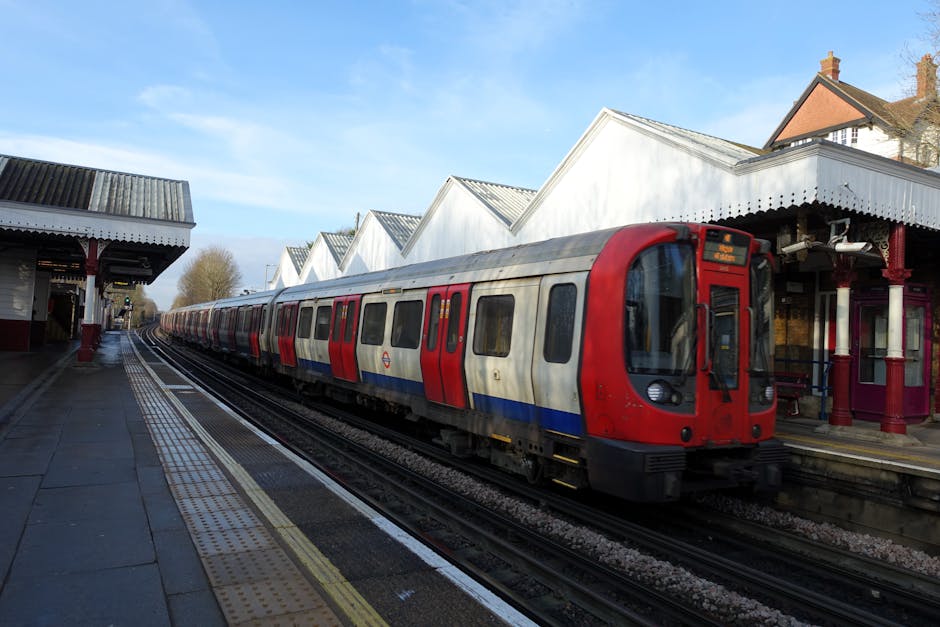
Ilford Station Man with Van Removals Guide for Commuters
If you commute through Ilford Station, you already know the rhythm: early trains, tight timings, busy pavements, and not much room for a last-minute panic. That is exactly why an Ilford station man with van removals guide for commuters matters. Moving near a station is a different kind of job. You are not just shifting boxes; you are working around peak-hour footfall, loading restrictions, flat entrances, awkward parking, and the simple fact that commuters do not have all day.
This guide breaks down how a man and van move near Ilford Station actually works, who it suits, what to plan for, and how to avoid the little mistakes that turn a straightforward move into a stressful one. Whether you are moving a studio, a shared flat, a few large items, or a whole household on a tight schedule, you will find practical advice here that is useful in the real world, not just on paper.
And yes, if you are trying to fit a move around the morning rush, you are not being dramatic. It really is a different puzzle.
Table of Contents
- Why Ilford station man with van removals guide for commuters Matters
- How Ilford station man with van removals guide for commuters Works
- Key Benefits and Practical Advantages
- Who This Is For and When It Makes Sense
- Step-by-Step Guidance
- Expert Tips for Better Results
- Common Mistakes to Avoid
- Tools, Resources and Recommendations
- Law, Compliance, Standards, or Best Practice
- Options, Methods, or Comparison Table
- Case Study or Real-World Example
- Practical Checklist
- Conclusion
- Frequently Asked Questions
Why Ilford station man with van removals guide for commuters Matters
Ilford Station sits in a busy part of East London, and that means moving there comes with its own set of pressures. If you commute daily, your schedule is probably already squeezed between work, travel delays, errands, and family life. Add a move into that mix and suddenly even a small removal job can feel like a logistical jigsaw.
That is the core reason this topic matters. A local man with a van service is often the most practical option for commuters because it is flexible, relatively quick to book, and more suitable for short, local, or time-sensitive jobs than a larger full-scale removal operation. In plain English: it can help you move without taking a whole day off work or turning your evening into a packing marathon.
It also matters because station-area moves are affected by things people forget about. Where will the van stop? Can it wait safely? Will your lift be working? Is there a narrow stairwell, a controlled parking bay, or a shared entrance you need to work around? Little details make a big difference. Truth be told, most moving stress comes from the bits nobody thought about early enough.
If you are new to the area, a broader read on what to expect from living in Ilford can also help you understand the day-to-day feel of the neighbourhood before you move in.
How Ilford station man with van removals guide for commuters Works
A man with a van move is usually simple on the surface. You book the service, the driver arrives with a van sized for your load, your items are loaded, transported, and unloaded at the destination. But for commuters, the service works best when it is planned around your travel pattern, your building access, and your available time window.
Most station-area removals fall into one of three patterns:
- Home-to-home moving for a flat, studio, or small house move.
- Item-only transport for furniture, appliances, boxes, or bulky items bought or sold locally.
- Time-sensitive moves that need to fit around a workday, train connection, or building access slot.
For commuters, the service is often more about timing than distance. A move from a flat near the station to a property only a few miles away can still be tricky if it needs to happen during the busiest hour of the day. This is where a local provider who understands the area can make the difference. They know the likely pinch points, the better access routes, and how to keep the job moving without making a fuss. Nice and calm. That is what you want.
If you want a broader sense of the wider service range, it is worth browsing the services overview before you book. It helps you see whether you need a simple van hire style move, help with heavier items, or a fuller service package.
Key Benefits and Practical Advantages
For commuters, the biggest advantage of a man and van removal is flexibility. You can often arrange a slot that fits around work, early trains, or building access windows. That alone can take a huge amount of pressure off moving day.
Here are the main benefits in practical terms:
- Faster booking and turnaround compared with larger removal operations.
- Better for small and medium loads such as flats, student moves, and partial household moves.
- Less wasteful if you are not moving enough to justify a full-scale lorry and crew.
- Local knowledge that helps with parking, access, and station-area timing.
- Lower stress when you have to work around commuting and work schedules.
There is also a very real emotional benefit: you keep your day more manageable. A lot of people underestimate how exhausting it is to move after a commute. By the time you have been on a train, dealt with emails, and tried to answer "Have you packed the kettle?" for the third time, the brain is toast. A well-planned local move keeps things practical and contained.
If your move includes furniture that needs extra care, a dedicated furniture removals service can be a better fit than a general transport-only job. It is a small distinction, but it matters when you have wardrobes, sofas, or beds that need more than a quick lift.
Who This Is For and When It Makes Sense
This kind of move is not for everyone, and that is fine. The best removals service depends on the size of your load, your deadline, and how much help you actually need.
It makes the most sense if you are:
- moving from a flat near Ilford Station;
- relocating between rented properties with limited access time;
- changing accommodation between jobs or commutes;
- moving as a student or young professional with fewer items;
- transporting a few key pieces of furniture rather than a full household;
- needing a same-day or next-day solution for a time-sensitive move.
It is also a smart choice if you are not sure whether your building access is easy enough for a larger removals lorry. Flats around busy transport hubs can have awkward entry points, short waiting spaces, or loading restrictions. A smaller van can sometimes be the less stressful option, even if it is not the flashiest one.
Students, in particular, often benefit from a more compact service. If that sounds familiar, this student removals guide for Little Ilford is a useful companion read, especially if you are juggling term dates, deposits, and moving deadlines at the same time.
Step-by-Step Guidance
Here is the simplest way to organise a station-area move without overcomplicating it.
- List everything you are moving. Include boxes, furniture, awkward items, and anything fragile.
- Check access at both ends. Think about stairs, lifts, parking, entry codes, and loading points.
- Choose the right service type. A small load may only need a man and van, while bulkier items may need furniture-moving help.
- Book a realistic time slot. Avoid peak commuter congestion where possible, especially if access is tight.
- Pack in advance. Label boxes clearly by room or priority so unloading is quicker.
- Protect fragile and valuable items. Wrap glass, electronics, and anything with sentimental value. No one wants the teacup with the story to become the teacup with the crack.
- Confirm payment and contact details. Make sure everyone knows the arrival point, phone number, and any special instructions.
- Walk through the move at the destination. Direct items into rooms as they arrive. It saves endless shuffling later.
A small but important detail: try to keep one essentials bag with you. Keys, wallet, phone charger, medication, a bottle of water, and a change of clothes if needed. That one bag can save you a lot of grief.
For packing support, see the practical advice in packing and boxes guidance. It is the kind of page people usually ignore until they are surrounded by half-taped boxes at 11 p.m., then suddenly it becomes very useful.
Expert Tips for Better Results
In our experience, the smoothest moves near stations are the ones where the customer has thought through the awkward bits before moving day. Not every detail, of course. Just the ones that tend to bite later.
Use these practical tips:
- Book around your real life, not your ideal life. If you usually get home late, do not schedule a packing-heavy evening the day before.
- Measure furniture before moving day. A sofa that looks fine in the living room may be a nightmare at the stair bend.
- Keep fragile items separate. Mixed boxes slow everything down and increase risk.
- Be honest about volume. People often underestimate how much they own. The spare room is often a liar.
- Think about arrival order. Put the items you need first near the door or label them clearly.
- Ask about insurance and handling. Especially if you are moving TVs, mirrors, or anything with a sentimental or financial value.
Another local tip: if you live close to the station and know your road gets busy at certain hours, avoid assuming a van can just "pull up for a minute." Sometimes it can, sometimes it really cannot. That tiny assumption is where delays creep in.
If you are comparing local operators, you may find it helpful to review local removal companies in Little Ilford alongside simpler van-only options. It gives you a better sense of service levels, not just prices.
Common Mistakes to Avoid
A lot of moving problems are avoidable. Not all of them, but enough to matter.
Some of the most common mistakes are:
- Leaving packing until the last minute. This creates panic and slows down the move.
- Ignoring parking and access. A van cannot load what it cannot reach.
- Choosing a service without checking what is included. Some jobs need lifting help, not just transport.
- Booking too close to peak commuting times. It can add friction you simply do not need.
- Failing to protect items properly. Scratches and breakages are rarely worth the shortcut.
- Not reading terms carefully. Especially around cancellation, waiting time, and payment arrangements.
One mistake people make near transport hubs is assuming everything will be fine because the distance is short. But short distance does not always mean simple. A fifteen-minute drive can still become an awkward half-hour if the van has to circle for access, wait for a lift, or move around a busy street scene.
And to be fair, even experienced movers get caught out sometimes. It happens. The key is reducing the number of unknowns.
Tools, Resources and Recommendations
You do not need specialist equipment for every move, but a few basic tools make a huge difference. If you are doing any of the packing yourself, these are worth having on hand.
- Strong boxes in mixed sizes, not just one box type for everything.
- Packing tape and a decent tape gun if you are doing more than a handful of boxes.
- Bubble wrap or paper for fragile items.
- Furniture blankets or padding for wooden and upholstered pieces.
- Labels and marker pens for room names, priority items, and fragile warnings.
- Zip bags for screws, brackets, remote controls, and small parts.
- Basic trolley or sack truck if you are helping with smaller items and have safe access.
On the planning side, it also helps to compare services rather than just focusing on the first quote you see. A transparent provider will usually explain what is included, what is optional, and whether you may need help with storage or packing support. If your schedule is uncertain, take a look at storage options in Little Ilford so you have a back-up plan if there is a gap between move-out and move-in.
If your move is urgent, a same-day removals service may be worth considering, though it is best used when the load is modest and your access is already organised. Same-day jobs are handy, but they work best when the client is ready too. That bit gets forgotten more often than you would think.
Law, Compliance, Standards, or Best Practice
For a station-area move in the UK, the biggest compliance concerns are usually practical rather than dramatic. The main things to think about are road safety, parking rules, insurance, and the safe handling of goods. If a van has to stop in a controlled area, the driver should follow the local rules in place, and customers should not assume they can hold a space without checking whether that is actually permitted.
Good practice also means asking sensible questions before booking:
- Is the service insured for the kind of items you are moving?
- What happens if access is blocked or delayed?
- Are waiting charges or extra costs clearly explained?
- How are fragile or high-value items handled?
- Is there a clear complaints process if something goes wrong?
Trustworthy operators should be clear about their service terms and safety approach. If you want to understand how a provider handles those issues, the pages on insurance and safety and health and safety policy are worth reading before you commit.
Payment clarity matters too. A professional service should explain how payments work and what security measures are in place. It sounds basic, but clear payment terms remove a lot of uncertainty on moving day. For that, check payment and security details and the company's terms and conditions.
If accessibility is a concern because of stairs, mobility needs, or building layout, it is sensible to review the provider's accessibility information and ask direct questions. Better to ask now than improvise later. That is just common sense.
Options, Methods, or Comparison Table
Not every move near Ilford Station needs the same solution. Sometimes a basic van is enough. Sometimes you need a more hands-on service. Here is a straightforward comparison to help you choose.
| Option | Best For | Strengths | Limitations |
|---|---|---|---|
| Man with a van | Small to medium moves, flat moves, commuter schedules | Flexible, quick, efficient, often more affordable | May not suit very large households or complex moves |
| Full removal crew | Larger homes, multiple heavy items, long-distance moves | More labour, more capacity, less lifting for you | Usually more expensive and less flexible for short notice |
| Self-move with hired van | Very budget-conscious movers with help available | Maximum control, can be lower cost upfront | You do the lifting, driving, planning, and risk management |
| Specialist item service | Pianos, antiques, oversized furniture | More suitable handling for delicate or heavy items | Not designed for general household moves |
For many commuters, the man and van option wins because it balances convenience with cost. If you are moving from a one-bed flat or a shared house, it is often the sweet spot. If your move is mainly furniture, though, you may want to compare it with a dedicated house removals service or a more specific flat removals option.
Case Study or Real-World Example
Imagine this: a commuter living in a second-floor flat near Ilford Station is moving to a nearby home after changing jobs. The move is local, but the old building has a narrow stairwell, and the new place has a time window for key collection in the late morning. On top of that, the person still needs to catch a train later that day.
The smartest approach here is not to force a huge all-day operation. Instead, the move is split into clear stages: boxes packed the night before, furniture dismantled where possible, van booked outside peak commuter times, and essentials carried separately. The mover arrives, loading is organised by room, and the most important items go in last so they come out first at the new place.
What makes this work is not luck. It is sequencing.
That is the bit many people miss. A move becomes much easier when you think in order, not just in items. If the kettle, bedding, and laptop charger are buried under random boxes, you will feel it by the first evening. If they are ready, the whole move feels less like a scramble and more like a reset.
It also helps to know the area's broader character. Reading about Ilford's culture, cuisine and community can be surprisingly useful if you are new to the neighbourhood, because settling in is not just about transport and furniture. It is about how the place feels once the van has gone and the boxes are stacked.
Practical Checklist
Use this checklist a day or two before the move. It is simple, but it saves headaches.
- Confirm the moving date and arrival time.
- Check access at both properties, including stairs and lifts.
- Reserve or check parking arrangements if needed.
- Finish packing all non-essentials.
- Label boxes by room and priority.
- Keep fragile items separate and clearly marked.
- Dismantle furniture where practical.
- Set aside screws, fittings, and small parts in labelled bags.
- Prepare keys, documents, and payment details.
- Pack an essentials bag for the first 24 hours.
- Keep phone charged and available for contact.
- Walk the route from entrance to van if access is tight.
Expert summary: the easiest commuter move is rarely the cheapest quote on paper, and it is rarely the biggest van either. It is the one that fits your access, your timing, and your actual volume of items. That is where a good local man with a van service earns its keep.
Get a free quote today and see how much you can save.
Conclusion
Moving near Ilford Station does not have to be chaotic, even if your week is already full and your diary looks a bit ridiculous. The right man with van service can make the process much easier by giving you flexibility, local knowledge, and a realistic plan for getting your things from A to B without a fuss.
The main thing is to treat the move like a commuter problem as much as a removals problem. Timing, access, and preparation matter just as much as the van itself. Get those right and the rest tends to fall into place. Not perfectly, maybe, but well enough to feel sane.
If you are weighing up your options, take a moment to review the wider man with a van service in Little Ilford and compare it with the more general removal services available locally. A little comparison upfront can save a lot of stress later. And that, honestly, is worth it.
Move steadily, plan cleanly, and give yourself a bit of breathing room. The boxes will get there. They always do.
Frequently Asked Questions
What is a man with a van removals service near Ilford Station?
It is a flexible moving service that provides transport, and often loading support, for smaller or medium-sized moves near the station area. It suits commuters who need a practical, time-aware solution.
Is a man and van service good for flat moves in Ilford?
Yes, especially for studio flats, one-bed flats, or shared homes with a moderate number of items. It is often a better fit than a full removal crew when access is tight or the move is local.
How far in advance should I book a move near Ilford Station?
As early as you can if your schedule is fixed, especially around weekends or month-end. If your move is urgent, ask about same-day availability, but do not leave packing until the last minute.
Can a man with a van handle furniture and boxes together?
Usually, yes. Most local services are set up for mixed loads. Just make sure you explain the furniture sizes and whether any items are unusually heavy or awkward.
What should I do if parking is difficult near my building?
Tell the provider in advance. Parking and access are often the difference between a smooth move and a frustrating one. If needed, discuss nearby loading points or alternatives before moving day.
Are fragile items safe with a man and van removal?
They can be, provided they are packed properly and the provider knows what they are carrying. Use strong packaging, label boxes clearly, and ask about handling expectations before the move.
Do I need to dismantle furniture before the van arrives?
Not always, but it often helps with larger pieces like beds, wardrobes, and tables. If you are unsure, ask the mover whether dismantling will make loading easier or safer.
How do I compare quotes fairly?
Look at what is included, not just the number at the bottom. Check loading help, travel time, waiting charges, insurance, and whether the service suits your volume of items.
Is storage useful if my move dates do not line up?
Yes. Short-term storage can be very helpful if you are waiting for keys, dealing with delays, or moving in stages. It is a sensible backup for commuter moves with awkward timing.
What if I only need to move one or two large items?
A small man with a van booking is often perfect for that. It is common for people to move sofas, beds, desks, or appliances without needing a full household removal service.
Should I choose a van service or a full removals company?
If your move is relatively small or local, a van-based service is usually more efficient. If you have a larger property, multiple heavy items, or a more complex relocation, a full removals company may be the better choice.
Where can I learn more about local moving support and trust signals?
Review service pages, safety information, and pricing details before booking. Pages like pricing and quotes, about us, and insurance and safety help you understand how the provider works and what standards to expect.