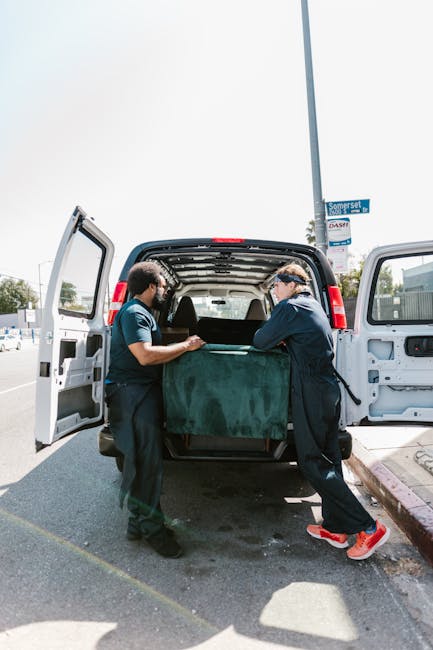
Gants Hill to Little Ilford small van removals route tips
Posted on 21/06/2026
Gants Hill to Little Ilford Small Van Removals Route Tips
If you're planning a move from Gants Hill to Little Ilford, the route itself may look short on a map, but small details can make a big difference on moving day. A small van removals trip sounds simple enough-load up, drive across East London, unload-but in real life there are parking pressures, traffic pinch points, awkward access, and timing issues that can turn a tidy plan into a messy one. These Gants Hill to Little Ilford small van removals route tips are designed to help you move smarter, not harder.
This guide focuses on what actually matters: the best time to travel, how to plan loading order, where delays usually happen, and how to avoid the sort of mistakes that create avoidable stress. It also covers when a small van is the right choice, how to prepare for flats and busy streets, and what to expect if you're moving furniture, student belongings, or a full household's essentials. Let's face it, moving is rarely the fun bit. But with the right route plan, it becomes a lot more manageable.
Why Gants Hill to Little Ilford small van removals route tips Matters
For a move between nearby parts of East London, people often assume the route is the easy part. In truth, the route is where a lot of hidden problems show up. A small van has less space, less margin for error, and less tolerance for repeated trips than a larger vehicle. If you get the timing wrong, the access wrong, or the parking wrong, you can lose the main advantage of using a smaller van in the first place.
Gants Hill and Little Ilford are both busy residential areas with a mix of terraced streets, flats, main roads, school traffic, and local parking pressure. That means a small van removal is often less about distance and more about coordination. You're not just moving items from A to B. You're managing street access, lift access, walking distance, and the order in which things come off the van. A few good route tips can save you a surprisingly large amount of time.
There's another reason this matters. On a compact move, people often pack "just enough" and then discover the van is full before the awkward items are loaded. That usually leads to a second trip, which can be fine if planned for, but frustrating if it was not. Good route planning helps you decide whether the move is genuinely suited to a small van, whether you need a bit of extra flexibility, and whether services such as man with a van Little Ilford or broader removal services in Little Ilford are the better fit.
How Gants Hill to Little Ilford small van removals route tips Works
A small van removals route plan is basically a practical sequence: assess the access at both addresses, choose the best time to travel, map the likely driving route, and prepare the load so the most important items are easiest to reach. Simple on paper. Less simple when you're standing on a narrow stairwell with a dining chair that only just fits around the banister. We've all been there, or something like it.
The route itself is generally straightforward, but the real work sits around the edges. The right route tip might mean avoiding peak congestion, allowing for a one-way detour, or arranging a short walk from the van to the entrance rather than expecting the driver to park directly outside. With small van removals, that kind of thinking matters because every extra minute spent manoeuvring is time not spent loading or unloading.
In practical terms, the move usually works best when you break it into five stages:
- Check what you are moving and whether a small van is enough.
- Assess parking and building access at both addresses.
- Plan the travel window around traffic and local activity.
- Pack and label items so unloading is efficient.
- Build in a small buffer for delays, stairs, or awkward furniture.
If your move includes boxed belongings plus one or two larger pieces, this is often where a focused service such as packing and boxes support or furniture removals in Little Ilford can make the day feel much less chaotic.
Key Benefits and Practical Advantages
There's a reason people choose a small van for local moves: it can be efficient, flexible, and easier to position than a larger vehicle. That can be especially useful in tighter residential streets where a full-size lorry would be overkill. A good route plan amplifies those advantages.
Here's what you gain when the route is planned properly:
- Better access: You can choose a route and parking plan that suits narrow streets and limited stopping space.
- Less wasted time: Fewer awkward turns, fewer circles looking for parking, fewer delays at loading.
- Lower stress: You're not improvising while carrying boxes and watching the clock.
- Safer handling: Better sequencing means less rushing and fewer chances of damage.
- More efficient unloading: The van is packed in the order you need, not the order things happened to go in.
There's also a money angle, although it's wise to be careful about assumptions. A smoother route can reduce unnecessary waiting, repeated loading, or extra mileage. That does not automatically mean a cheaper move, but it often means better value. If you're comparing options, it can help to look at pricing and quotes alongside the actual service scope, not just the headline number.
For people with limited time, the biggest advantage is clarity. You know what's happening, what the van can handle, and where the pressure points are. That alone is worth a lot on moving day.
Who This Is For and When It Makes Sense
This kind of move is a good fit for people who are relocating a modest amount of furniture, boxes, and household items between two London addresses without needing a full removal truck. Students, flat movers, first-time renters, and small households often find that a small van makes sense. It can also suit people who are moving in stages, say the essentials today and the bigger pieces later.
You might especially benefit from these route tips if you are:
- moving from a flat with stairs or limited lift access;
- relocating around school-run hours or weekday congestion;
- handling a move with one driver and a helper;
- transporting only select furniture pieces, not a whole home;
- trying to fit a move around work, study, or a same-day deadline.
Students often need a more lightweight, time-efficient setup, which is why services like student removals in Little Ilford can be helpful. Flat movers, meanwhile, may find flat removals Little Ilford more relevant if stair access and compact packing are central concerns. If you're moving a whole property, though, a small van may still work, but only if you're selective and realistic about what fits.
Truth be told, a small van is not the answer to every move. But for the right move, it's often the neatest answer.
Step-by-Step Guidance
If you want the move to feel organised rather than rushed, follow this sequence. It's not glamorous, but it works.
1. Measure your load before you do anything else
Start with the bulky items: bed frames, mattresses, wardrobes, sofa sections, desks, and white goods. Then count boxes. A van can look roomy until you start stacking in odd-shaped items. A quick inventory helps you decide whether you need one trip, two trips, or a different vehicle size.
2. Check access at both properties
Look at the practical stuff: stair widths, lift size, corridor bends, and whether the van can stop near the entrance. If the parking space is tight, work out where the van can legally and safely wait while loading or unloading. A few minutes of checking can save a lot of shouting later. Not ideal to discover the staircase is a bit of a squeeze when the sofa is halfway up it.
3. Choose your travel window with care
For a Gants Hill to Little Ilford move, off-peak travel is usually easier. Early morning or mid-morning may work better than the busiest commuter hours, depending on your exact addresses and day of the week. If you are moving on a Friday afternoon or around the weekend, allow a little more time. A small delay can ripple through the whole day.
4. Pack in loading order, not random order
Pack items based on how you'll need them on arrival. Essentials should be easy to reach. Fragile items should not end up under heavy boxes. Furniture that needs disassembly should be labelled clearly and kept with its fixings. If that sounds obvious, good. It should. But you'd be surprised how often screws end up in a mystery envelope tucked inside a coat pocket.
5. Load the van strategically
Put heavier, sturdier items in first, then build around them with boxes and lighter pieces. Leave what you'll need first at the front or nearest the door for easy unloading. Keep a small gap for soft items or protective blankets if you are using them. The goal is stable, balanced weight-not a game of van Tetris gone wrong.
6. Unload in room-by-room order
Once you arrive in Little Ilford, direct items straight to their destination room where possible. That saves a lot of re-handling later. If you're moving into a flat with limited space, it can help to set down larger pieces first and then deal with the smaller boxes. If you have storage overflow or a delayed handover, a storage option in Little Ilford may keep the move from becoming cluttered.
Expert Tips for Better Results
Route planning is not just about which road looks shortest. It's about what the move needs in the real world. A few small adjustments often make the day far smoother.
- Keep an eye on school-run and rush-hour patterns: local congestion can be more disruptive than the distance itself.
- Leave room for one unexpected issue: a blocked curb, a delayed handover, or a lift that decides to be temperamental.
- Use simple labels: "Kitchen", "Bedroom 1", "Fragile", "Open First" beats overcomplicated labelling every time.
- Protect awkward furniture properly: tables, mirrors, and flat-pack pieces are often damaged by scraping, not by huge impacts.
- Tell the removal team about access issues early: if there's no easy parking, say so upfront.
One thing that helps more than people expect is a short pre-move walk-through. Stand at the front door, look at the path, then at the van space, then at the stair route. You'll notice the pinch points very quickly. That little bit of attention saves a lot of back-and-forth.
Another useful habit: keep the first-day essentials separate. Kettle, phone charger, keys, documents, toiletries, and a change of clothes should not be buried behind six boxes of books. You only make that mistake once, usually at 10pm when you are too tired to care. Or too tired to find the tea bags, which is worse.
If you want broader support, the team page on services overview can help you understand how small van support fits into the wider removals picture.

Common Mistakes to Avoid
Most moving day problems are preventable. The frustrating bit is that they're usually predictable too. A few common mistakes come up again and again on short urban moves.
- Underestimating the volume: small van does not mean infinite space.
- Ignoring parking restrictions: even a short stop can become a problem if access is tight.
- Packing heavy items too late: this leads to rushed loading and awkward weight distribution.
- Not checking lift dimensions: sofas and wardrobes have a funny way of revealing their true size at the worst moment.
- Assuming every road will be clear: there may be delivery vehicles, bin collections, or general local traffic to work around.
- Forgetting protective materials: blankets, tape, shrink wrap, and labels save hassle later.
Another subtle mistake is not being honest about the contents. If you say "just a few boxes" but actually have a bed, desk, dining chair set, and a full wardrobe's worth of clothes, the plan changes. And that is fine, as long as everyone knows before the van arrives.
If your move involves fragile or specialist items, consider whether a standard small van setup is enough or whether you need something more tailored, such as piano removals in Little Ilford for heavier, delicate pieces. That is not the kind of thing to improvise on the day.
Tools, Resources and Recommendations
You do not need fancy equipment to move well, but the right basic tools make a big difference. This is especially true on a short route, where people sometimes get too relaxed and then find themselves making avoidable extra trips.
Useful items to have ready:
- strong boxes in mixed sizes;
- packing tape and a tape dispenser;
- marker pens for labels;
- blankets or covers for furniture;
- ratchet straps or tie-downs if appropriate;
- bags for screws, cables, and fittings;
- a trolley or sack truck if there are heavier items and a suitable route.
For many people, the most useful "resource" is not a gadget at all-it's a simple move plan. Write down the order of items, arrival time, contact details, keys, parking notes, and what needs to be unloaded first. A paper note works perfectly fine. So does a phone note. No need to make it more complicated than that.
If you are still deciding whether to use a small van, a general man and van Little Ilford option, or a more comprehensive service, it can help to read about removals in Little Ilford and compare the level of support against your actual workload. For bigger domestic jobs, house removals Little Ilford may be the more suitable route.
Law, Compliance, Standards and Best Practice
For a local removal, the main compliance concerns are usually practical rather than dramatic: road safety, safe loading, parking rules, and protecting belongings in transit. If a removal service is operating professionally, it should have proper attention to vehicle safety, insurance arrangements, and staff safety procedures. You should feel comfortable asking about these basics.
Best practice in removals usually includes:
- securing loads so they do not shift during transit;
- using suitable handling methods for heavier items;
- respecting parking and access rules;
- communicating clearly about fragile or valuable items;
- providing reasonable care and attention to property during loading and unloading.
It is also sensible to check what is covered by the provider's insurance and safety approach. That is especially important if you are moving furniture through narrow stairways or shared hallways where accidental scuffs can happen. Nobody wants drama over a chipped wall or a scraped sideboard.
You may also want to review the company's health and safety policy, terms and conditions, and payment and security information before confirming the booking. These pages are useful for understanding what to expect, how payments are handled, and what responsibilities sit with each side. It is not glamorous reading, admittedly, but it is useful reading.
If sustainability matters to you, consider whether packing materials can be reused or recycled after the move. The company's recycling and sustainability guidance may be relevant if you want to reduce waste where possible.
Options, Methods, or Comparison Table
Not every small move should be handled the same way. The right method depends on quantity, access, urgency, and how much help you need on the day.
| Option | Best for | Advantages | Watch out for |
|---|---|---|---|
| Small van only | Light to moderate loads, good access | Flexible, efficient, often ideal for short local moves | Limited space; may need careful packing or a second trip |
| Man and van support | Boxes plus a few furniture items | Practical help with lifting and loading; less stress | May not suit full-house moves with many large items |
| Full removals service | Larger household moves, complex access, fragile items | More hands, more coordination, broader support | Usually more than you need for a small, simple move |
| Move with storage | Staggered completion dates or temporary overflow | Flexible if your new place is not quite ready | Requires extra planning and labelling |
For many Gants Hill to Little Ilford jobs, the sweet spot is a small van with enough help to load efficiently but not so much complexity that the move becomes over-engineered. If you already know your items are simple and access is decent, that can be the cleanest option. If the move is trickier than it first appears, a more structured service may actually save time and hassle.
Case Study or Real-World Example
Here's a realistic example. A couple moving from a one-bedroom flat near Gants Hill to a smaller place in Little Ilford had a tight schedule, a stair-only property, and a fairly modest load: a bed, mattress, a small sofa, a desk, kitchen boxes, and several bags of clothing. At first glance, a small van sounded perfect.
The catch was access. The Gants Hill address had a narrow front space and limited stopping room. The Little Ilford property had easier unloading but no long-term parking nearby. Instead of trying to "wing it", the move was organised in a simple sequence: the heavier furniture was pre-dismantled, the boxes were grouped by room, and the van arrived mid-morning to avoid the worst traffic. The sofa went in first, the desk on top of the loading sequence but protected, and the essentials were left near the rear door for quick unloading.
The result was not magical, just sensible. No frantic searching for screws. No pile-up in the hallway. No standing around wondering whether there would be space for one more box. That is really what good route planning does-it removes the little uncertainties that pile up into a big headache.
If the move had been larger, they might have needed a broader domestic package such as oops
Practical Checklist
Use this checklist the day before and again on the morning of your move. It is simple, but it catches the stuff people forget under pressure.
- Confirm pick-up and drop-off addresses.
- Check parking and access at both ends.
- Measure any bulky furniture and doorways.
- Separate essentials, valuables, and fragile items.
- Label boxes by room and priority.
- Pack screws, cables, and fittings in one clearly marked bag.
- Protect furniture with blankets or suitable wrapping.
- Keep phones charged and contact details to hand.
- Allow extra time for traffic or building access delays.
- Review the service details and any booking conditions.
If you want a fuller moving-day prompt, the Valentines Park house move checklist for Ilford removals is a helpful companion piece because many of the same planning habits apply to local moves around this part of East London.
Expert summary: the best small van route plan is not the shortest line between two postcodes. It is the plan that fits your load, access, timing, and unloading needs without forcing last-minute improvisation.
Conclusion
A move from Gants Hill to Little Ilford can be refreshingly straightforward if you plan it with the right details in mind. The route itself is only one part of the job, but it's a part that affects everything else-timing, access, stress levels, and how well the van is used. When you think ahead about parking, loading order, and building access, you make the whole day smoother.
Small van removals work best when the move is matched to the method. That means being honest about volume, realistic about traffic, and a bit disciplined about packing. Not flashy. Just solid. And to be fair, solid is exactly what most people want on moving day.
If you are weighing up options, comparing support levels, or simply trying to avoid a stressful last-minute scramble, the most sensible next step is to check what kind of service fits your load and your access conditions. A little planning now can save a lot of breathing room later.
Get a free quote today and see how much you can save.
With the right route tips and a calm plan, even a local move can feel surprisingly under control. A small win, but a very welcome one.